
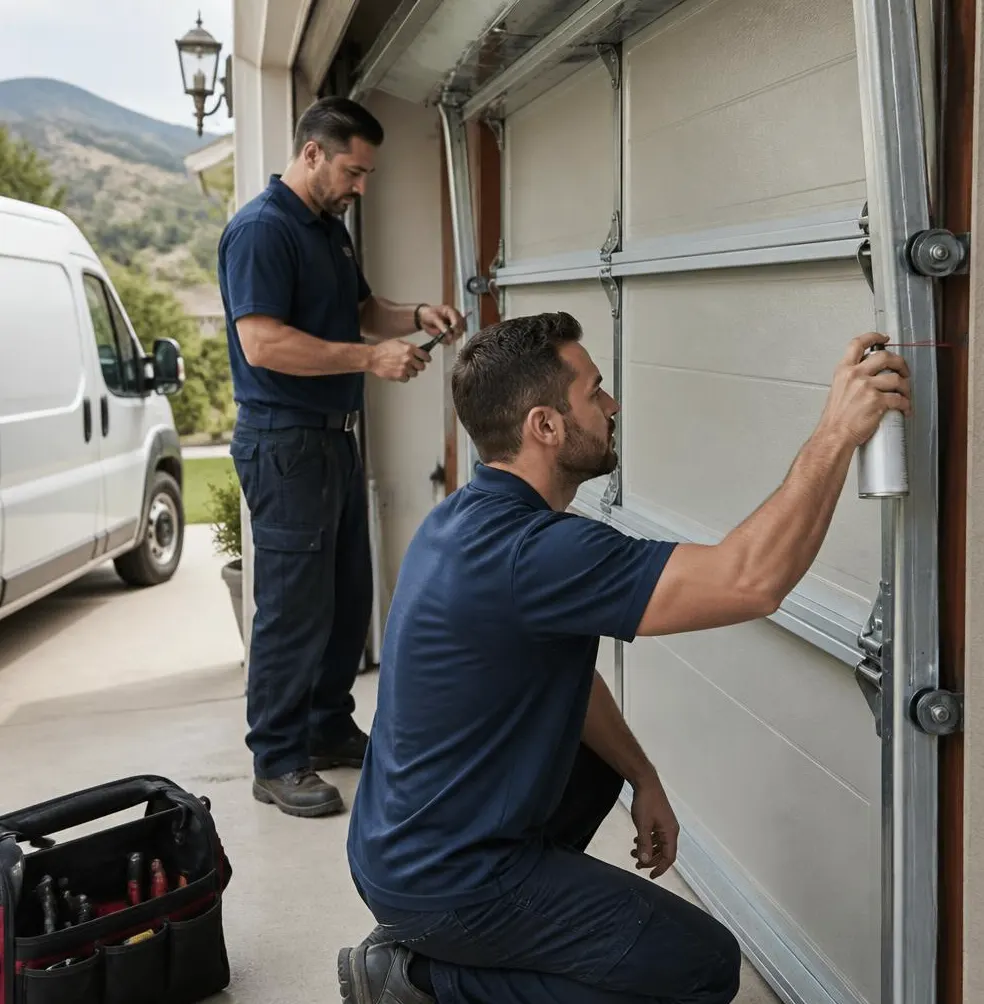
What a Technician Sees on a Storm-Damage Call
The pattern is almost always the same. A homeowner calls after a strong afternoon storm or a tropical system passes through, and the garage door panels are bowed outward or caved in, the track is bent away from the wall, and sometimes the whole door has popped off its rollers. When we ask what happened, the answer is usually "the wind just got under it." That's exactly what occurred — and it's also exactly what's preventable with an hour of inspection before storm season peaks, not after.
Why the Garage Door Is the Weakest Point in the House
Every other opening in a typical home — windows, entry doors — is small and heavily framed. A garage door is the largest moving opening in the structure, often 16 feet wide, held in place by rollers, tracks, and a spring system rather than a solid frame. When wind pressure builds against the house during a storm, that door is the panel most likely to flex, buckle, or blow in. Once it fails, wind rushes into the garage and pushes up against the roof and walls from the inside, which is how a single failed garage door can turn into much larger structural damage. This is why wind-load-rated doors and bracing matter so much in Central Florida, where hurricane season routinely brings sustained winds and sudden gusts through Lake County communities.
Inspect the Door Itself
Before storm season ramps up further, walk around the door with these checks:
- Panels: Look for dents, rust spots, or soft swelling along the bottom panels, especially on older steel or wood doors that have taken on humidity over the years. A panel that's already weakened by moisture will fail at a lower wind speed than a sound one.
- Tracks: Tracks should be straight and firmly bolted to the framing. Florida humidity causes wood framing to swell and shift slightly over time, which can loosen track brackets without any obvious sign until the door is under load.
- Rollers and hinges: Worn or rusted rollers let the door rattle in its track during wind gusts, which accelerates wear exactly when you need the hardware to hold tight.
- Springs and cables: A fraying cable or a spring that's lost tension puts uneven stress on the door when wind pushes against it, making it more likely to come off track mid-storm.
Reinforce What You Can
If your garage door doesn't already have a factory wind-load rating appropriate for Florida conditions, retrofit bracing kits are available that stiffen the panels horizontally. These won't make an old door as strong as a new wind-rated one, but they reduce flex significantly. Homeowners with double-wide garage doors should pay particular attention here — wider doors flex more under pressure than single doors, and that extra surface area is exactly what storm winds push against hardest.
Check the bottom seal and weatherstripping too. Afternoon downpours this time of year push water sideways under pressure, and a worn seal lets that water in, which contributes to the panel swelling and rust issues that weaken the door over time. A fresh seal is inexpensive and does double duty: better storm resistance and less water damage to whatever's stored just inside.
Don't Forget the Opener
Power outages are common during and after storms in this area. If your opener doesn't have a battery backup, the door is stuck in whatever position it was in when the power cut out — which is a problem if it was left open when the storm hit, or if you need to get a vehicle out during an evacuation. A battery backup unit keeps the opener functional for a limited number of cycles after an outage, which is often enough to get through the worst of it.
A Quick Pre-Storm Routine
- Close and lock the door manually if a locking bar is present — openers alone aren't always enough to hold against high wind.
- Clear the tracks of debris and lubricate rollers and hinges so the door moves freely if you need to operate it manually.
- Check that the garage itself is braced if you don't have a wind-rated door — temporary bracing across the inside of the door is a stopgap, not a long-term fix.
- Walk the perimeter for loose panels, rust, or bent hardware a few days before a storm is forecast, not the morning of.
When to Call Mascotte Garage Door Service
If you've noticed a bowed panel, a door that shudders or rattles in moderate wind, a track that's pulling away from the framing, or an opener with no battery backup, those are all signs worth addressing before the next system moves through rather than after. We handle off track door repair for doors that have already shifted, and we install reinforced, wind-load-appropriate doors for homeowners upgrading ahead of storm season through our garage door installation & replacement service. We'll also check cables, rollers, and spring tension as part of a full inspection so you know exactly where the door stands before the wind picks up.
Don't wait for the first big storm of the season to find out your garage door isn't ready. Call Mascotte Garage Door Service today and we'll get your door storm-ready — fast, honest work for homeowners across Mascotte, Groveland, Clermont, and the rest of Lake County, FL.