
The One-Sentence Rule
If tightening hardware and lubricating moving parts doesn't noticeably quiet the door within a week, the noise is coming from something that needs replacing, not adjusting. The exceptions: grinding metal-on-metal sounds, a door that shakes or jumps on its track, or a loud bang followed by the door refusing to move. Those point to a broken spring, bent track, or failing opener gear — stop troubleshooting and call a technician, because a door under spring tension can cause serious injury if handled wrong.
Tools You'll Need
- Socket wrench set
- Garage door lubricant (silicone or lithium-based spray, not WD-40, which attracts dust and grit in our humidity)
- Rags
- Step ladder
- Flashlight
- Replacement rollers or hinges, if needed
Step-by-Step: Cheap Fixes First
- Tighten every bolt and screw. Vibration from daily use loosens hardware on the track brackets, hinges, and the opener's mounting bolts. Go over all of it with a socket wrench. This alone fixes a surprising amount of rattling.
- Lubricate the right parts. Spray lubricant on hinges, roller stems, and the springs themselves (wipe off excess). Skip the track — lubricating it attracts grime. Afternoon humidity and downpours common here speed up dried-out hinges, so this is worth doing every few months, not just once.
- Check your rollers. Steel rollers are loud by design and corrode faster in our moisture-heavy air. Nylon rollers run quieter and resist rust. If yours are pitted, flat-spotted, or visibly rusted, they're due for replacement — a straightforward homeowner task if the door is properly supported and the track sections are unbolted safely.
- Inspect and replace worn hinges. Hinges with elongated or oval holes (instead of round) are worn out and will cause rattling no matter how much you lubricate. Swapping them is DIY-friendly one at a time, leaving the rest of the door supported.
- Tighten and lubricate the opener's chain or rail. A chain-drive opener with a saggy chain slaps against the rail. Most openers have an adjustment bolt to take up slack — check your manual for the exact turn count. Add a drop of lubricant to the chain itself.
- Add vibration isolation. Rubber isolator pads between the opener motor and the ceiling mount, plus foam or rubber washers on the mounting bolts, stop the motor's vibration from transmitting into the rafters and walls. This is a cheap, effective upgrade for homes where the garage sits under or near living space.
When Cheap Fixes Aren't Enough: The Belt-Drive Swap
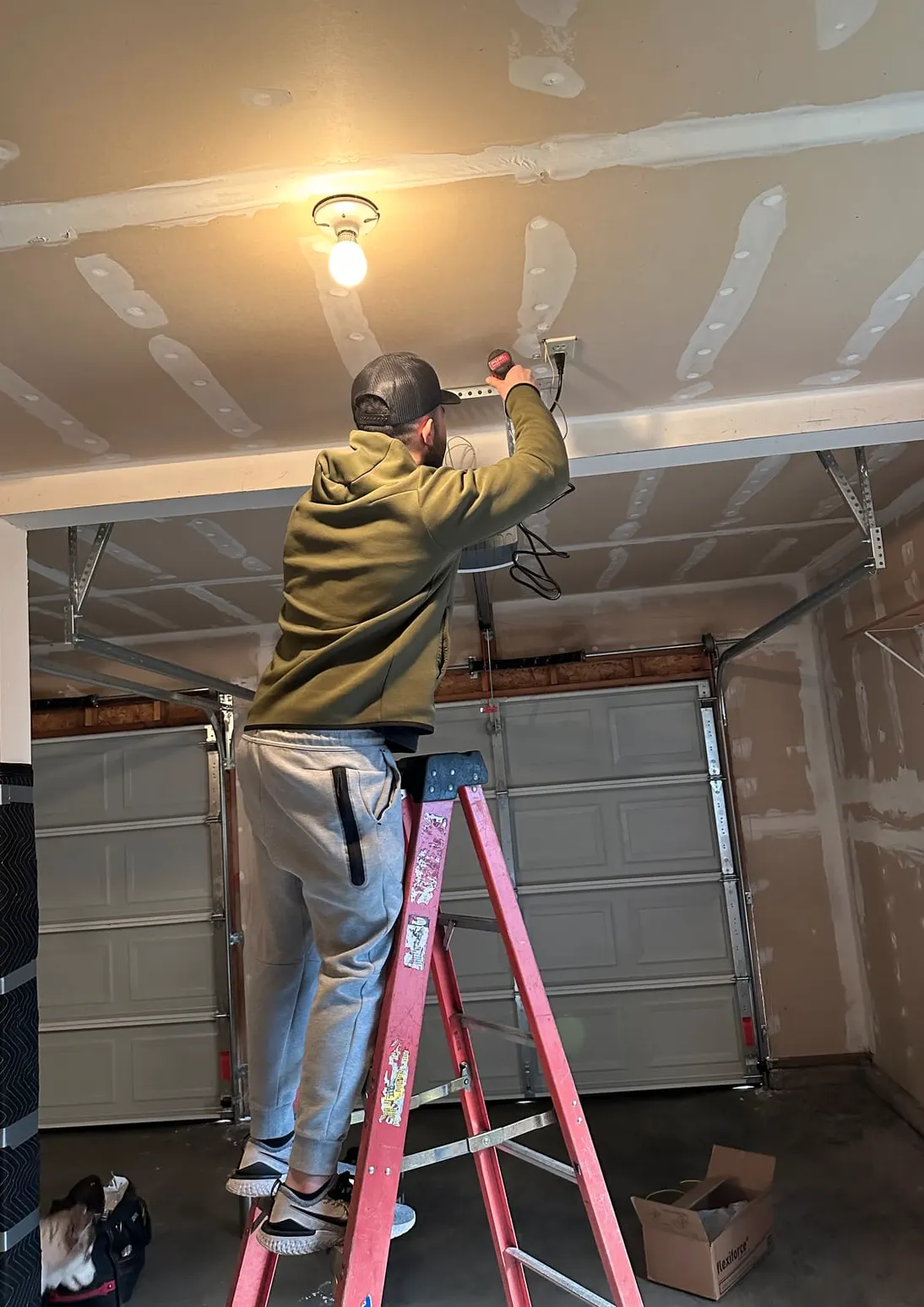
If you've done all of the above and the opener itself is still the loudest part of the system, the chain-drive mechanism is likely the culprit — not a part you can quiet, but one you can replace. Belt-drive openers use a reinforced rubber belt instead of a metal chain, cutting noise dramatically. National price ranges for a mid-range belt-drive opener typically run from the low to mid hundreds for the unit alone, before installation. This is a job for a technician: it involves rewiring the opener, reprogramming safety sensors, and properly tensioning a new rail system, and getting any of that wrong creates a safety hazard, not just a noise problem.
What Needs a Technician, Not a Toolbox
- Grinding or screeching that lubrication doesn't fix — often a failing bearing inside the opener motor
- A door that visibly shakes, leans, or jumps the track during operation
- Rust or swelling on wooden or steel panels along the bottom seal, common after a wet season, that's throwing the door out of alignment
- Frayed or rusted cables, which can snap without warning
- A full opener swap, especially moving from chain-drive to belt-drive
When to Call Mascotte Garage Door Service
If you've worked through the cheap fixes and the door is still loud — or you've spotted rust, fraying cables, or a shaky track — it's time to bring in a technician. We offer Garage Door Maintenance & Tune-Ups that cover full lubrication, hardware tightening, and roller/hinge inspection in one visit, plus Cable & Roller Replacement for parts that have corroded or worn out from Lake County's humidity. If you're ready to upgrade to a quieter belt-drive system, our opener installation service handles the wiring, sensor calibration, and safety testing so it's done right the first time.
Give Mascotte Garage Door Service a call today to schedule a tune-up or opener upgrade anywhere in Mascotte, FL and the surrounding Lake County area — a quieter garage door is closer than you think.