
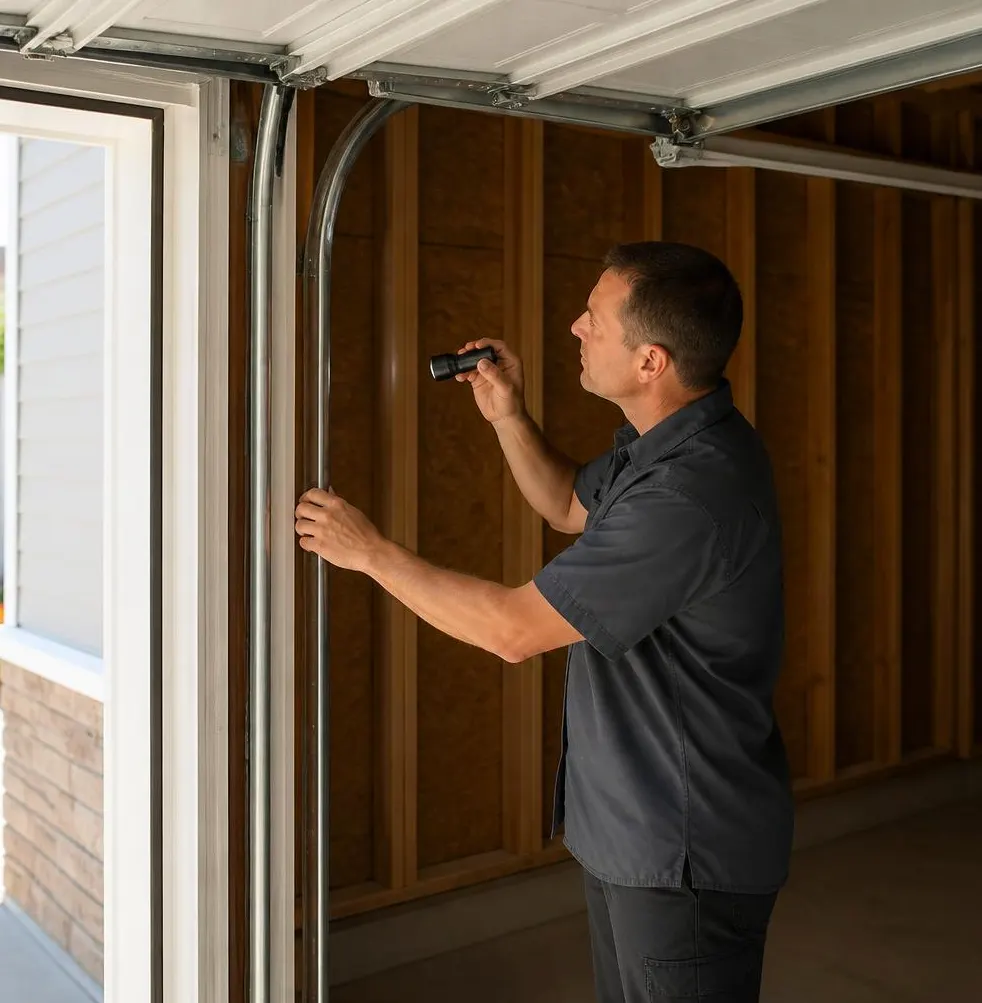
Skip this decision another season and here's what it costs: an uninsulated steel door left to bake through another Florida summer and swell through another round of afternoon downpours, while the AC unit on the other side of that garage wall works overtime. Or, on the flip side, a homeowner spends several hundred extra dollars on insulation for a detached shed-garage that never sees a thermostat anyway. Either mistake is avoidable once you understand what R-value actually does.
What R-Value Actually Measures
R-value is a measure of resistance to heat transfer. The higher the number, the slower heat moves through the material. On a garage door, that means a higher R-value slows down how fast outside heat (or AC-cooled air) passes through the panel. It does not mean the door is stronger, more hurricane-resistant, or more durable on its own — those are separate specs, even though insulated doors often happen to score better on wind load too, for reasons below.
The Two Numbers You'll See
- Single-layer (non-insulated) steel doors: essentially no meaningful R-value, just a thin steel skin.
- Insulated doors (polystyrene or polyurethane core): typically range from roughly R-6 to R-18+, depending on foam type and thickness. Polyurethane doors generally outperform polystyrene at the same thickness because the foam is injected and bonds to both steel skins, which also stiffens the panel.
Who Actually Benefits
Insulation earns its keep when the garage shares a wall, ceiling, or ductwork with conditioned living space. That covers a lot of homes in Lake County:
- Attached garages where the house AC has to fight heat bleeding through the garage wall, especially on west- or south-facing doors that take direct afternoon sun.
- Garages with a room above them — bonus rooms, converted lofts, or guest rooms get noticeably hotter without a barrier below.
- Garages used as workshops, home gyms, or laundry space where someone is actually spending time in there and wants it tolerable in July and August.
- Homes running mini-splits or window units in the garage to keep stored electronics, paint, or a freezer from overheating.
In these cases, an insulated door reduces how much heat transfers through the largest moving part of the wall, which can mean a noticeably more stable garage temperature and less strain on an adjacent AC system.
Who's Paying for Nothing
If the garage is detached, used strictly for parking and storage, has no shared wall with living space, and nobody spends time in it beyond grabbing the lawn mower, the thermal benefit of insulation is marginal at best. You're paying for R-value you'll never notice. In that situation, the money is better spent on a quality steel gauge, reinforced bracing for wind load, and good weatherstripping — not foam core.
The Local Twist: It's Not Just About Temperature
Here's the part that actually settles most of these arguments. Insulated doors, because of their sandwich construction (steel-foam-steel), are inherently stiffer and more resistant to flexing under wind pressure than a single flat steel skin. That matters in a region where garage doors need to handle wind-load requirements during hurricane season. A thicker, insulated panel with reinforced struts holds its shape better under gusts, which means less risk of the door buckling, popping off track, or forcing air into the garage during a storm. So even a homeowner who doesn't care about the AC bill might still land on an insulated door for the structural stiffness alone.
There's also a humidity angle. Florida's moisture swings cause steel to expand and contract, and uninsulated single-layer doors tend to show that stress faster — warping, slight bowing, or panels that no longer sit flush. The extra layer and rigidity in an insulated door resists this better, which can mean fewer off-track issues and less rattling over time.
The Trade-Offs Nobody Mentions
- Weight: insulated doors are heavier, which means springs and openers need to be properly matched and balanced. An old opener or worn springs may need upgrading alongside the door.
- Cost: expect insulated doors to run higher than single-layer steel, with the spread depending on foam type, window options, and panel design.
- Condensation: in a garage with high humidity and poor airflow, any door type can develop condensation on the interior face during temperature swings. Insulation reduces this somewhat but doesn't eliminate it if ventilation is poor.
When to Call Mascotte Garage Door Service
If you're weighing a replacement, our team can walk the garage with you, check whether the space is conditioned or shares a wall with living space, and recommend the right core type and R-value for the actual use case — not just the highest number on the brochure. That's part of our Garage Door Installation & Replacement service. If you already have an insulated door but it's sagging, rattling, or the opener is straining to lift it, our Garage Door Maintenance & Tune-Up service checks spring balance, hardware, and panel condition before summer heat and storm season put more stress on it.
Settle the argument for good — call Mascotte Garage Door Service for a straight answer on what your garage actually needs, no upsell required.